
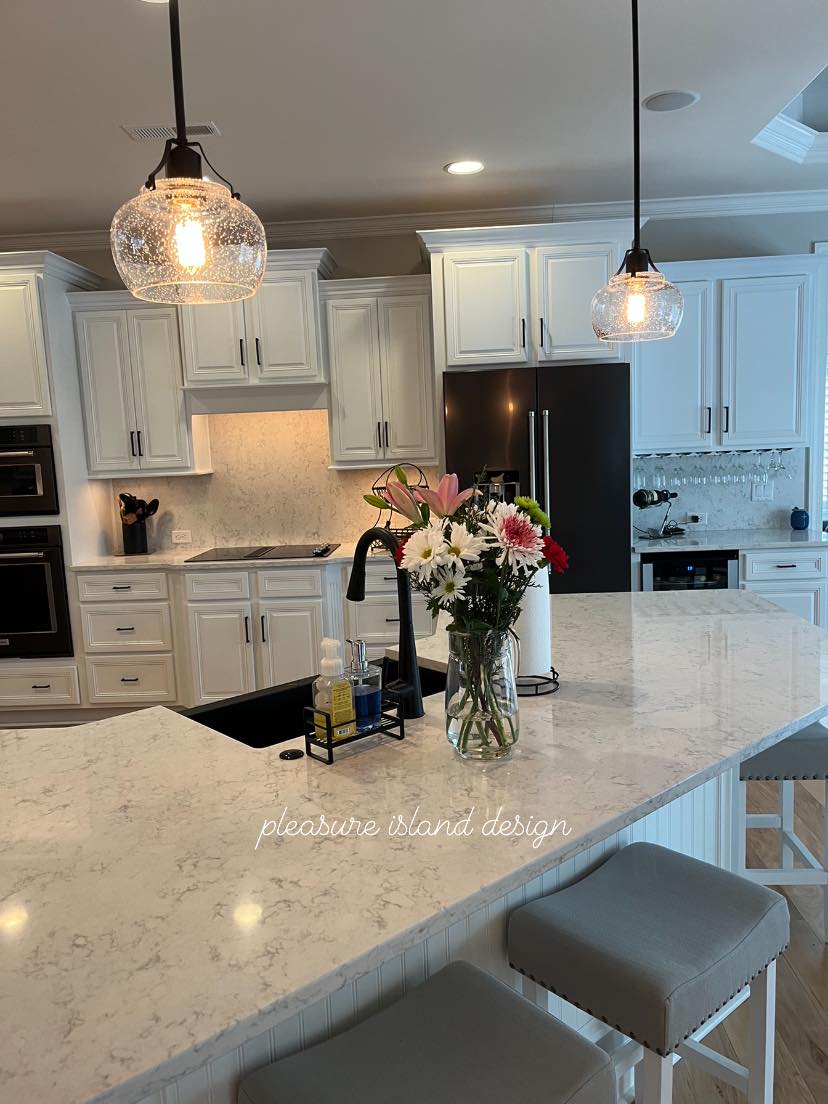
One of the most rewarding parts of our work at Pleasure Island Design is seeing the expression on a client's face when they walk back into their kitchen after a refinish. The transformation is real — and with the right care routine, that freshness can last for many years.
Professional cabinet refinishing using high-quality paints and topcoats is designed to be durable. But durability isn't the same as indestructible, and how you clean and care for your cabinets makes a significant difference in how long your finish stays pristine. This guide covers everything you need to know — including special considerations for homeowners in Wilmington, Kure Beach, Carolina Beach, and the broader coastal NC region.
Daily Cleaning: The Right Method
The single best habit you can develop is wiping down your cabinets regularly before grease and grime have a chance to build up. The method is simple:
- Use a soft, lint-free microfiber cloth. Microfiber lifts grease and food residue without scratching the finish. Avoid paper towels — they're surprisingly abrasive on painted surfaces over time.
- Dampen with warm water, not soaking wet. Excess water near cabinet joints and edges can work into the wood over time. Wring the cloth well before wiping.
- For tougher spots, add a drop of mild dish soap. A small amount of gentle dish soap — think Dawn or a similar mild formula — cut in warm water handles cooking grease effectively without stripping the topcoat.
- Always follow with a dry wipe. After cleaning, dry the surface with a clean, dry cloth to prevent moisture from sitting on the finish.
Safe to Use
- Soft microfiber cloths
- Warm water
- Mild dish soap (diluted)
- Murphy's Oil Soap (diluted)
- White vinegar solution (1:10 ratio)
- Commercial cabinet cleaners labeled "safe for painted surfaces"
Products to Avoid
- Abrasive scrub pads or steel wool
- Bleach or chlorine-based cleaners
- Ammonia-based cleaners (many glass cleaners)
- Spray wax or silicone polishes
- Degreaser sprays not rated for painted surfaces
- Magic Eraser / melamine foam (too abrasive)
Dealing with Chips and Scratches
Even with the best care, everyday kitchen life occasionally leaves a mark. Here's how to think about common types of surface damage:
- Minor surface scuffs. Very light scuffs — the kind left by cabinet doors rubbing against each other — can often be addressed with a gentle buffing using a soft cloth. If a scuff is more prominent, a small amount of matching touch-up paint (which we can provide after your project) applied carefully with a fine artist's brush will blend it in.
- Small chips at edges. Hard edges — the top corners of doors, the leading edges of drawer faces — are the most vulnerable to chipping from impact. We always use a protective topcoat specifically designed to handle edge impact, but a small chip can still happen. Touch-up paint applied in thin layers, allowed to dry fully between coats, handles this well.
- Deep gouges or widespread damage. If a cabinet door has taken serious physical damage, the best outcome usually involves a professional touch-up visit. Contact us — in most cases we can address spot damage quickly and restore the surface to a seamless appearance.
When we complete your project, ask us for a small jar of touch-up paint matched to your finish. Store it in a cool, dry place. A quick touch-up applied within the first year is virtually invisible — catching damage early means the repair is minimal.
Humidity Considerations for Coastal NC Homes
This is the section that matters most for homeowners throughout Wilmington, Kure Beach, Carolina Beach, Wrightsville Beach, and the surrounding coast. Coastal North Carolina has some of the highest ambient humidity in the country — and kitchens add moisture on top of that from cooking, dishwashers, and daily activity.
"Coastal kitchens need a finish that handles real-world humidity. That's why we specify multi-layer water-resistant topcoats — not standard wall paints — for every project."
Here's how to protect your cabinets in a high-humidity environment:
- Use your range hood consistently. Cooking steam is one of the primary accelerators of finish wear near the stove. A good range hood captures moisture before it settles on cabinet surfaces. Run it every time you cook — not just when something burns.
- Don't let steam from the dishwasher hit adjacent cabinets. When your dishwasher opens after a cycle, the burst of steam should have somewhere to go. If your dishwasher door opens directly below a cabinet run, consider opening it just slightly to vent first, then opening fully once the main steam burst has passed.
- Keep an eye on the cabinet under the sink. Slow leaks under the sink are common and often go unnoticed until damage is done. Periodically check that the area is dry — moisture trapped in a cabinet interior can compromise even the best exterior finish from the inside out.
- Maintain consistent interior temperature. Extreme temperature swings — especially in vacation homes left unoccupied with no climate control — cause wood to expand and contract dramatically, which stresses any finish over time. If your coastal NC home sits empty during part of the year, a programmable thermostat that maintains a moderate temperature range (65–80°F) protects the entire home, not just the cabinets.
When to Call for a Professional Touch-Up
Our workmanship warranty covers manufacturing defects and finish failures that aren't related to cleaning damage or physical impact. But beyond warranty situations, there are times when a professional touch-up visit is simply the most efficient path to restoring your kitchen's appearance:
- Multiple chips or areas of wear concentrated in high-touch zones (around pulls, at corner edges)
- Yellowing or discoloration that cleaning doesn't resolve — which may indicate a cleaning product has degraded the topcoat
- Before listing your home for sale, when you want your kitchen looking its absolute best
- After a significant event (water damage, renovation work nearby) that may have affected your cabinet surfaces
We serve homeowners throughout SE North Carolina — from Wilmington and Leland to Kure Beach and Wrightsville Beach. Reach out to schedule an assessment. We'll give you an honest evaluation of what makes sense, whether that's a quick touch-up or a full refinish.
We're Here to Help
Questions About Your Cabinets? Let's Talk.
Whether it's a touch-up, a full refinish, or just a question about care — we're happy to help. Free consultations, no obligation.